12 March 2024 · 5 min read · Marianka
The image of women in advertising, or how we are portrayed.
Based on the research report by Jarosław Kończak, “The image of women in advertising”, we can conclude that it is women who make the purchasing decisions.
“In the 2009 study »The Gender of the Consumer in Marketing«, women in Poland accounted for 62% of shopping, and according to research by ARC Rynek i Opinia from 2016, for 67%. Research by Mindshare Polska from 2019 showed that Polish women decide above all on the purchase of food and drink for children (76%), cleaning products and household chemicals (75%), cosmetics (74%), clothes and shoes (65%) and home appliances (53%).
According to the Boston Consulting Group, American women account for, among other things, 94% of spending on home furnishings (94%), the choice of holidays (92%), the purchase of a house or flat (91%) and even of a car (60%); while according to an Ernst & Young research report from 2012, as early as 2028 women may control 75% of global consumer spending.”
Looking at those figures we might conclude that women have thoroughly outclassed men when it comes to key purchasing decisions. Women focus more on their own needs, looking for the perfect product matched precisely to them, while men stay loyal to a single brand.
Yet only a few decades ago advertising concentrated on portraying women as mothers, housekeepers and even mistresses. It was often implied that a woman’s place is in the kitchen, not to mention outright sexualisation. Women liked those ads so much that between 2008 and 2017 gender stereotyping was the most frequently reported problem in advertising. The real turning point came in the last 6 years: although women are still shown as mothers and housekeepers, their independence, their worth and their career ambitions are now emphasised.
In 2021–2022 a study was carried out in which the author analysed 1,045 product and brand advertisements belonging to 209 brands. Only audio-video advertising was analysed, and the study covered campaigns from a range of industries: food, drinks, alcohol, over-the-counter medicines, beauty, finance, clothing, automotive, home appliances, aviation, services and luxury goods.
The aim of the study was to examine selected aspects of the female image in advertising. Ten areas were analysed, including: the woman’s attributes, her appearance, her stage of life, the protagonist’s surroundings, the female self, the promise contained in the ad, the protagonist’s emotions, her relationships with men and the narrator of the ad.
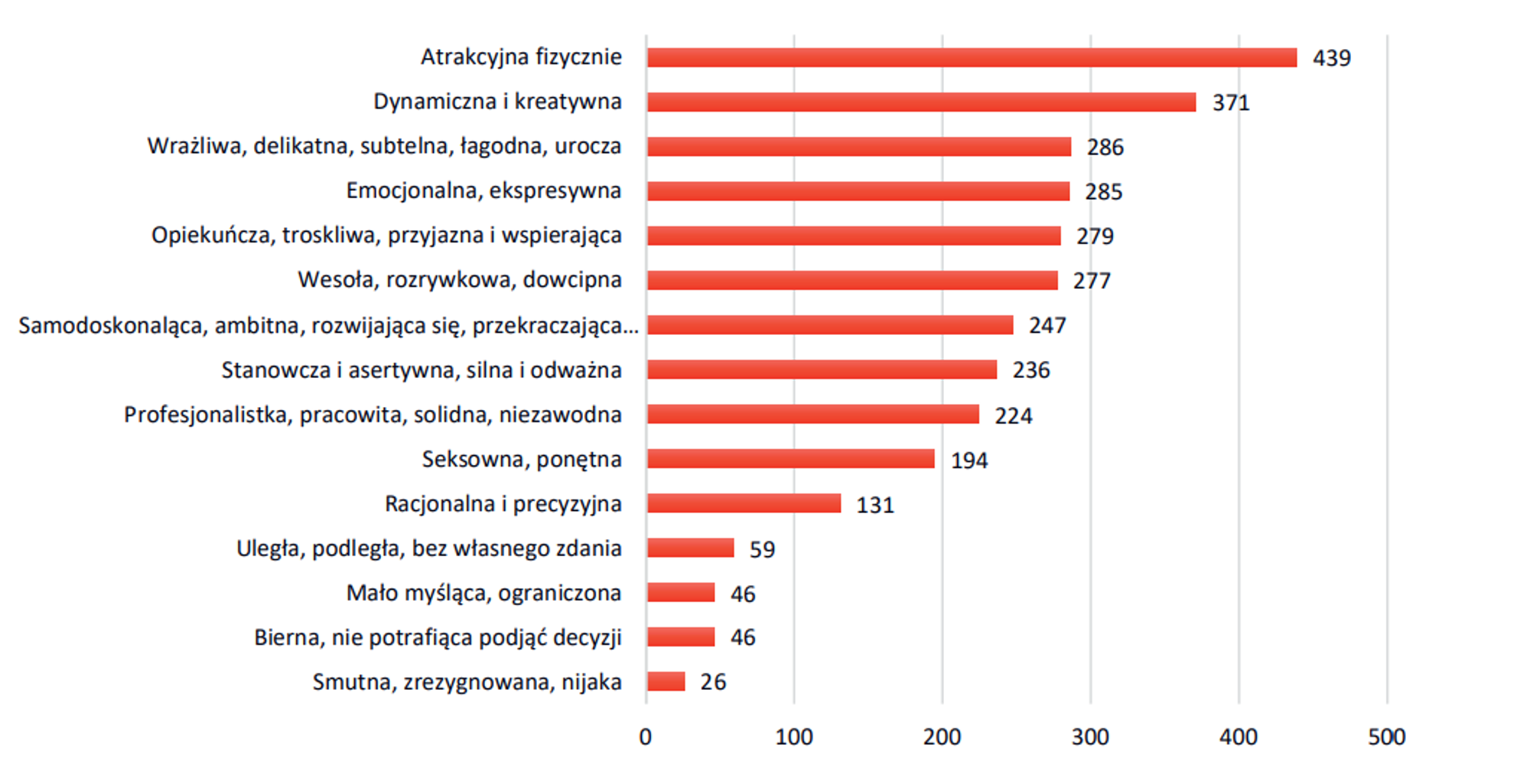
When the prevailing attributes of women in advertising were examined, the strongest aspect turned out to be physical attractiveness, followed closely by dynamism and creativity; by comparison with the top position, sexiness and allure landed near the bottom, as did passivity, submissiveness, sadness and resignation.
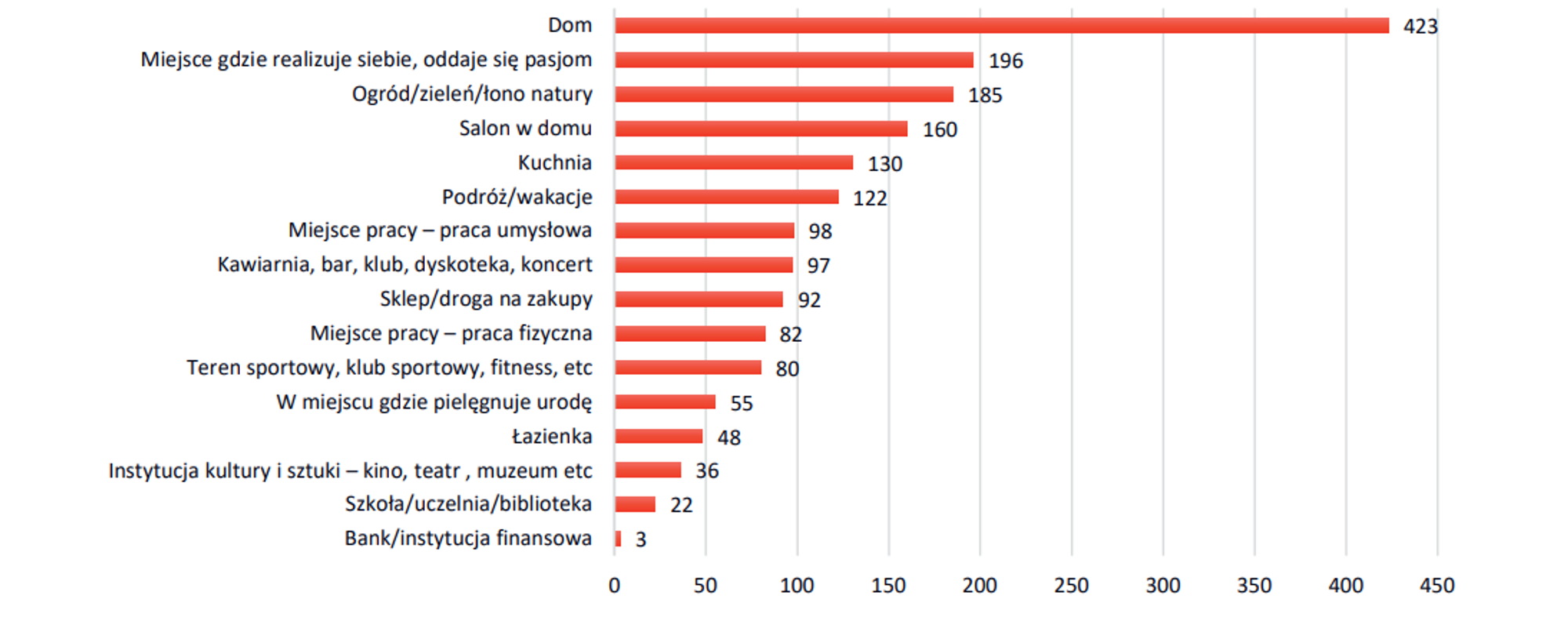
The most common places where women appeared were the home and a place where a woman devotes herself to her passions and fulfils herself. Surprisingly, at the bottom of the list we find banks, schools and cultural institutions.
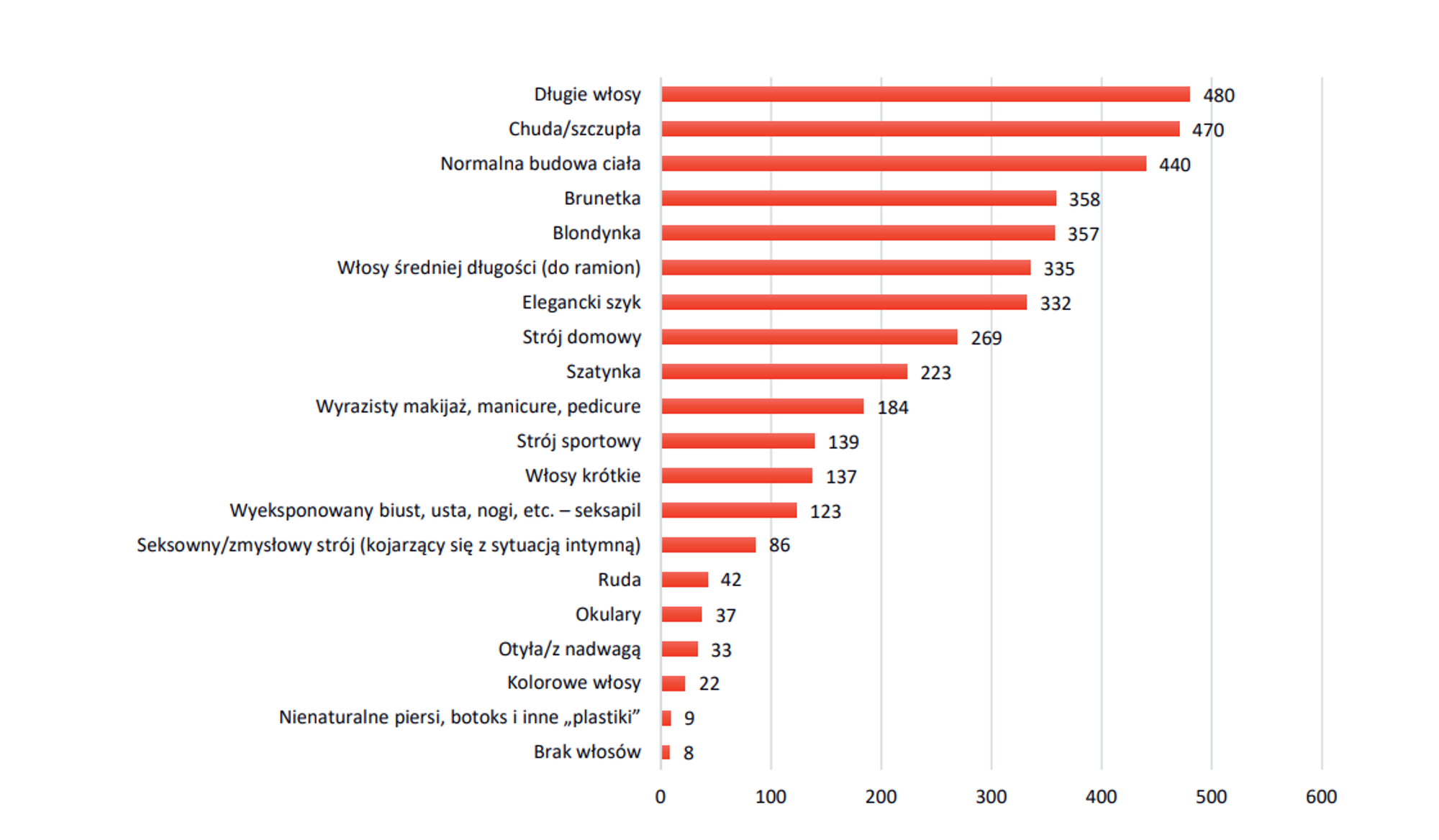
The next element examined was women’s appearance, where first place went to long hair, a slim or average figure, and brown and blonde hair. The least represented were women who were bald, obese or overweight, or who wore glasses.
The role in which women were portrayed in advertising was above all a strong, independent one, focused on personal growth. A little lower down we find businesswomen, stars, ideals and housekeepers with a passion. The least represented roles were the so-called “pretty airhead”, the woman as a sexual object and the unpredictable madwoman.
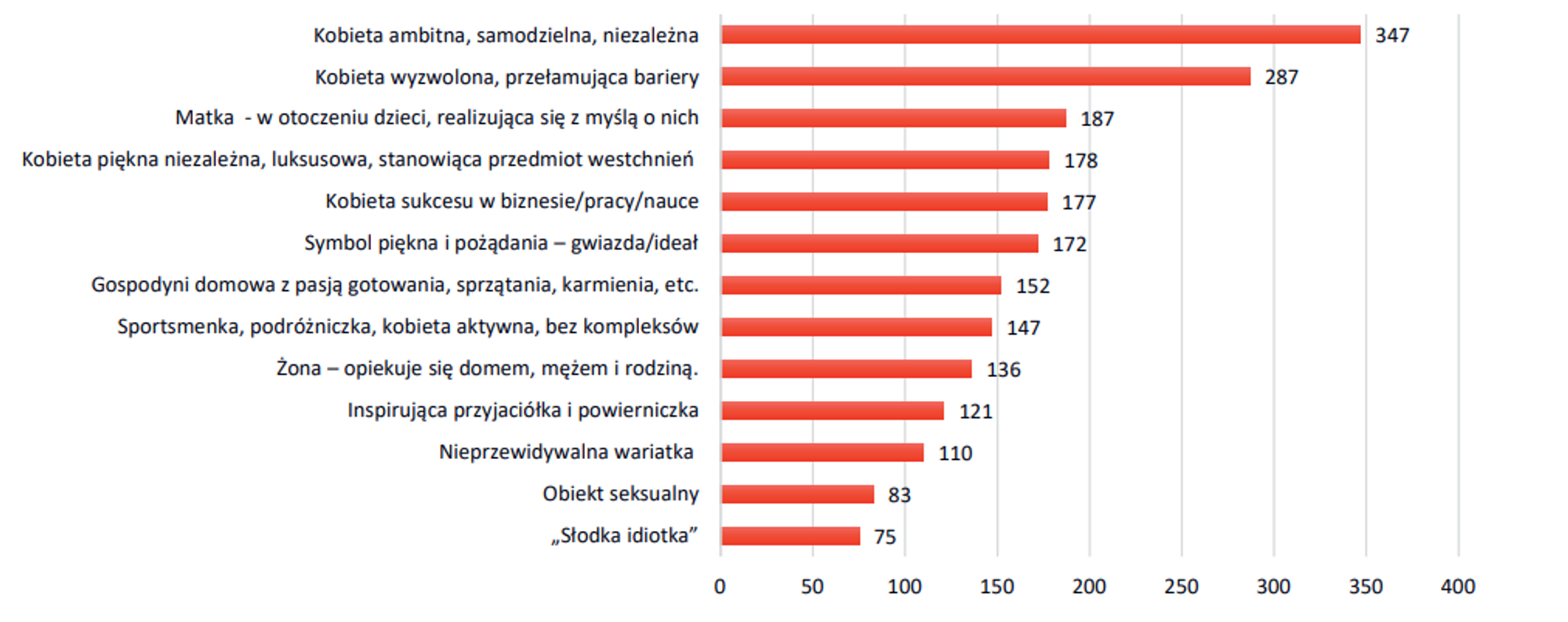
These are only 4 of the 10 charts showing the image of women in advertising; you will find more at the link here.
Looking at the image of women that advertising presents to us, the role of mother or housekeeper is still largely visible. What matters, however, is that producers increasingly bear in mind the importance of a woman’s position, her independence and her passions, and the fact that women do not always identify with what is assigned to them from above. The role of women as ambitious and independent took first place for a reason.
At the same time, a woman’s greatest attribute in advertising remains physical attractiveness, that is a slim figure and brown or blonde hair. Yet those traits are not always the ones advertisers want most. Women aged 16 to 49, who fall into the so-called commercial group, are the most frequently chosen target audience — compared with older women, who account for barely 8% of those shown in advertising. A similarly small share of the women in advertising display traits of obesity or excess weight, even though according to the WHO more than half the population in Europe alone is obese.
In the context of femvertising, which promotes diversity and acceptance of how we look, the facts differ significantly from the reality of advertising. That is at odds with what women expect, as expressed among others in SheKnows Media research from 2016, where as many as 83% of respondents said they wanted to see a realistic image of women in advertising.