10 April 2024 · 3 min read
Why you cannot fit a whole funnel into one graphic and one piece of copy
Based on the research report by Jarosław Kończak, “The image of women in advertising”, we can conclude that it is women who make the purchasing decisions.
Imagine someone shows you a new product or service and says “Buy me”. What goes through your head? A tiny fraction of people will say “Fine, I’ll take it”, but most of us will wonder what company this is and what the product they are trying to sell us actually is. You are unlikely to learn all of that from one message, in one graphic. That is the very short answer to the question in the title. I would, however, like to expand on it a little and walk you through the structure of sales and marketing funnels (there are at least a few kinds; I want to discuss the most classic one).
Advertising is about building a relationship
From marketing 1.0, which was focused on the product, we have come a long way to marketing 3.0, which was focused on the person (so-called human-centric marketing). That is when the focus shifted to building a relationship with the person we want to sell something to. Today you can still come across 2 different types of advertising.
- Type one — ads straight out of a bargain-basement outfit: “Buy now”, “Don’t miss out” (such messages can also be used in relationship-based communication, but they certainly do not dominate it, and definitely not at the top of the sales funnel).
- Type two — ads aimed at building a relationship and earning trust through well-chosen messages (I will come back to which ones).
Can you see the difference? Which of these do you see more often? Let me know in the comments.
So what does that second type of advertising involve?
Here is what the funnel looks like:
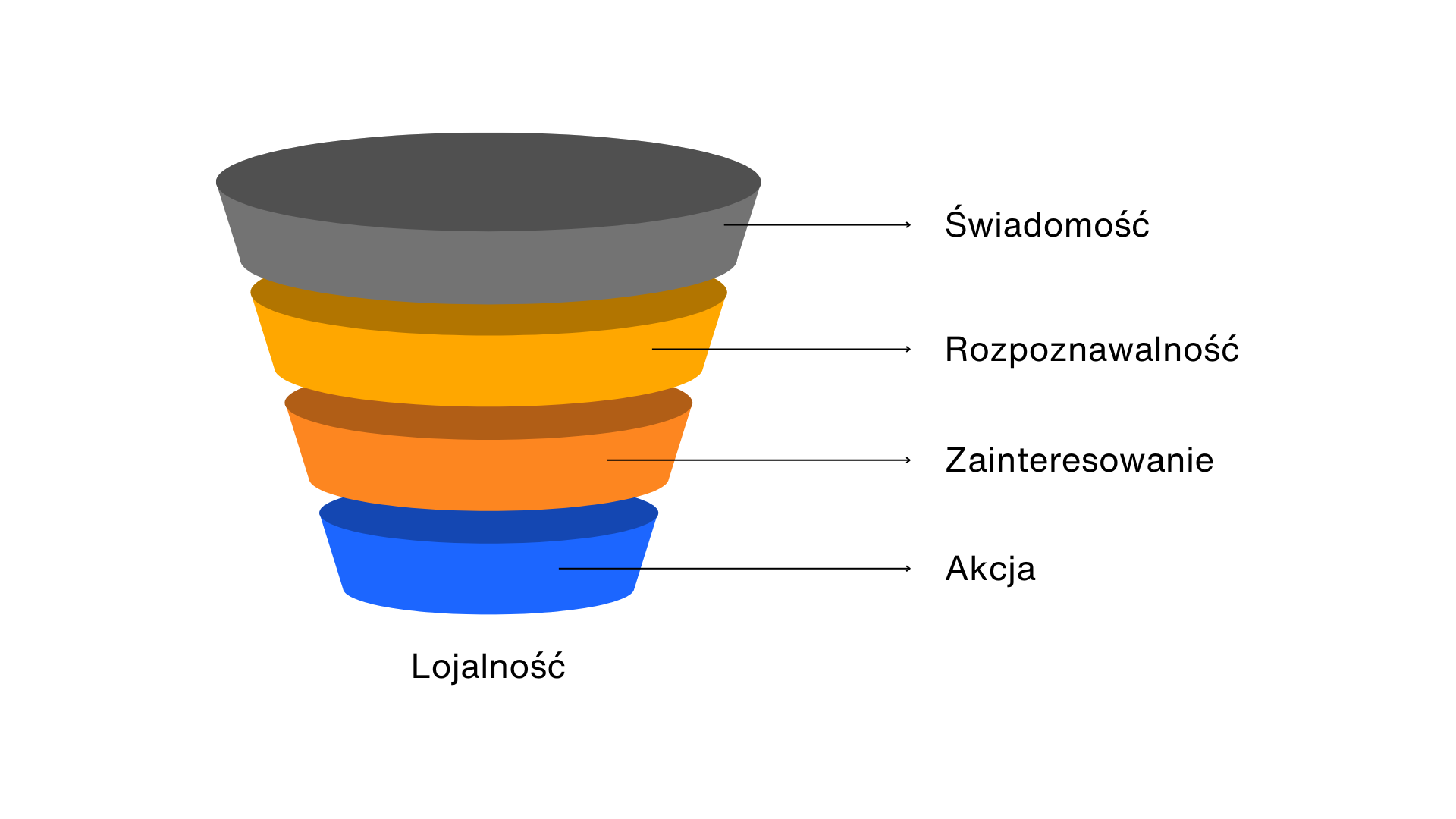
The funnel is called a funnel for a reason: at the start, messages about your brand reach a wide group of people who do not know you and have had no contact with your products. This is where the selection process begins. You tell them what the product or service is. Someone who is interested will either go to the website, or like the post, or interact with the ad in some other way (it all depends on the campaign objective chosen at the Facebook Ads level).
The next stage is recognition and interest (they often go together, for example when budgets are small). I prefer to work on a flat funnel, because I can see that the effects I want are the ones I get, and on top of that I shorten the customer’s path to the product.
At this stage we have to show what the customer gets out of your product. Tell them about:
- the benefits
- the extra features
- the impact on their life
At the third stage of the funnel — action — your customer is almost certain of the decision. What is holding them back? Perhaps a lack of reviews, case studies, numbers? Give them that in ads aimed at the warm audience (the one that already knows you).
The loyalty stage is where you have to look after your customer. Give them after-sales support, interest them in other products, for example in a newsletter. Nurture the relationship and you can be sure they will come back.
You could write a whole ebook about the marketing funnel, but I hope I have shed a little light on this tool that we use in our work every day.